Meade Tractor, situated in Boones Creek, Tennessee, plays a crucial role in the Johnson City agricultural community. This case study examines Meade Tractor's contribution to sustainable agriculture, highlighting both its successes and areas for improvement. We analyze their equipment offerings, indirect sustainability impacts, and propose actionable steps for enhanced environmental performance. We also explore the broader implications for farmers, Meade Tractor, and local government agencies. For more information on Meade Tractor, visit their website: Meade Tractor.
Meade Tractor's Equipment: A Foundation for Sustainable Practices
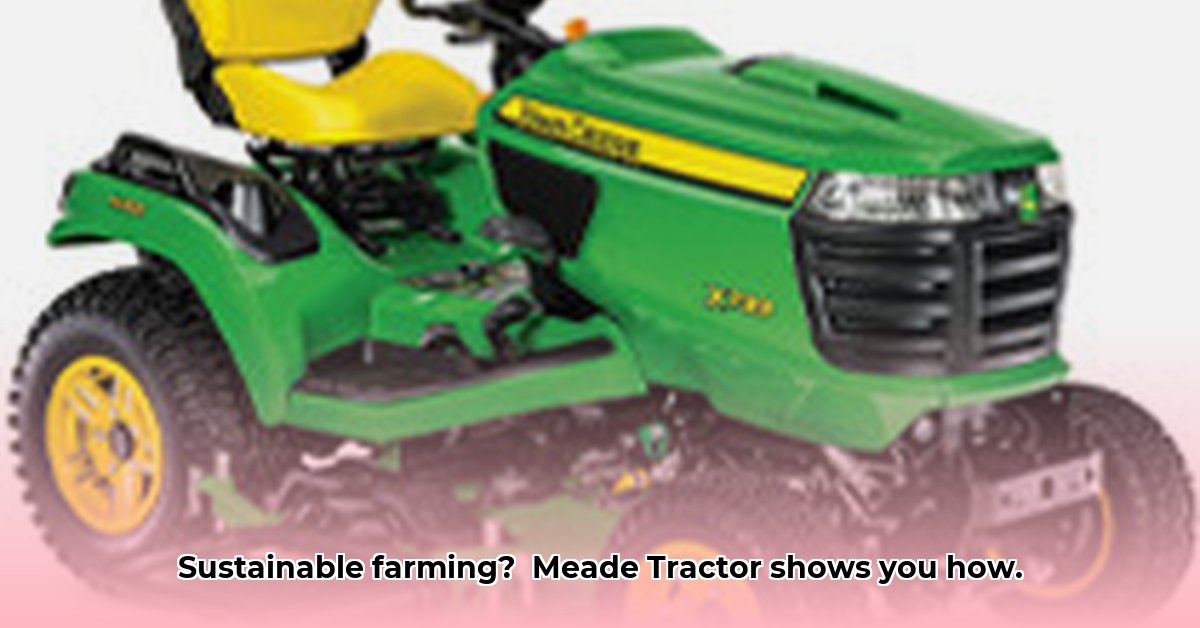
Meade Tractor provides a wide range of John Deere and STIHL equipment. While the specific models and their detailed sustainability features (fuel efficiency, emission levels) are not publicly available on their website, this represents a key opportunity for improvement. To fully assess their contribution to sustainable agriculture, a comprehensive catalog detailing the eco-friendly attributes of each model – such as EPA fuel economy ratings and emission certifications – would be beneficial. This information is crucial for farmers seeking to optimize their environmental impact. High-resolution images showcasing these models would also enhance the information's accessibility and impact.
- John Deere Tractors: Several John Deere models are recognized for fuel efficiency, but precise data is needed for a thorough assessment. Features like auto-guidance and precision farming technologies also contribute to sustainability by optimizing resource use.
- STIHL Equipment: The environmental impact of STIHL products also needs further investigation. This includes examining their manufacturing processes and the lifecycle analysis of their products. Data on reduced emissions compared to competitors would be important.
The absence of readily available, detailed specifications on fuel efficiency and emission levels for specific models prevents a complete evaluation of Meade Tractor's role in promoting sustainable farming practices.
Indirect Contributions to Sustainability: Operational Efficiency
Meade Tractor's operational practices indirectly support sustainability. The availability of online ordering likely reduces customer travel, decreasing carbon emissions. While quantifiable data is lacking, an analysis comparing pre- and post-online-ordering travel distances could provide valuable insights. The estimates would depend upon factors like the average customer distance and the number of orders processed. A similar analysis can be conducted on the impact of scheduling on reducing travel time and resources.
Furthermore, Meade Tractor's focus on equipment repair and maintenance promotes equipment longevity. Extending the lifespan of farming equipment reduces the need for frequent replacements, thereby mitigating waste and conserving resources. This "repair-don't-replace" approach aligns with the growing circular economy movement.
Gaps in Sustainability Data and Recommendations
A significant area for improvement is the lack of transparent, publicly available data on Meade Tractor's internal sustainability initiatives. Creating a comprehensive sustainability report detailing their goals, methods, and measurable results would significantly enhance their image and credibility. Such a report could incorporate:
- Energy consumption: Data on energy usage at their facilities and strategies for reducing energy consumption.
- Waste management: Details on their waste management practices, including recycling and waste reduction programs.
- Supply chain: Information on the environmental impact of their supply chain, including sourcing of materials and transportation.
- Employee training: Details on programs for educating employees about sustainable practices.
These efforts would demonstrate Meade Tractor's ongoing commitment to environmental stewardship.
Stakeholder Analysis: Collaboration for a Greener Future
Sustainable agriculture requires collaboration. The following table outlines short- and long-term actions for key stakeholders:
| Stakeholder | Short-Term Actions | Long-Term Goals | Challenges |
|---|---|---|---|
| Meade Tractor | Publish a sustainability report; Employee sustainability training. | Develop a comprehensive sustainability plan with measurable targets; Invest in renewable energy. | Data collection difficulties; Internal resistance to change; Financial constraints. |
| Local Farmers/Landscapers | Utilize online ordering and maintenance scheduling; Prioritize fuel-efficient equipment. | Participate in government incentive programs; adopt precision agriculture techniques. | High upfront costs; Lack of knowledge/access to information. |
| Government Agencies | Offer financial incentives for sustainable farming; Fund research into sustainable farming technology. | Develop infrastructure to support sustainable farming; Improve education and outreach programs. | Bureaucratic processes; Limited budgets; Balancing economic and environmental concerns. |
Conclusion: A Path Forward for Sustainable Farming
Meade Tractor has significant potential to contribute to sustainable agriculture in the Johnson City area. By implementing the recommendations outlined above and engaging in transparent communication, they can significantly bolster their positive impact on the environment. Collaboration among Meade Tractor, local farmers, and government agencies is essential to achieve a greener future for agriculture in the region. The journey towards sustainability is ongoing, but with proactive initiatives and transparent communication, significant progress is possible.